

Positive outlook for the current tourism season: How travel habits are changing
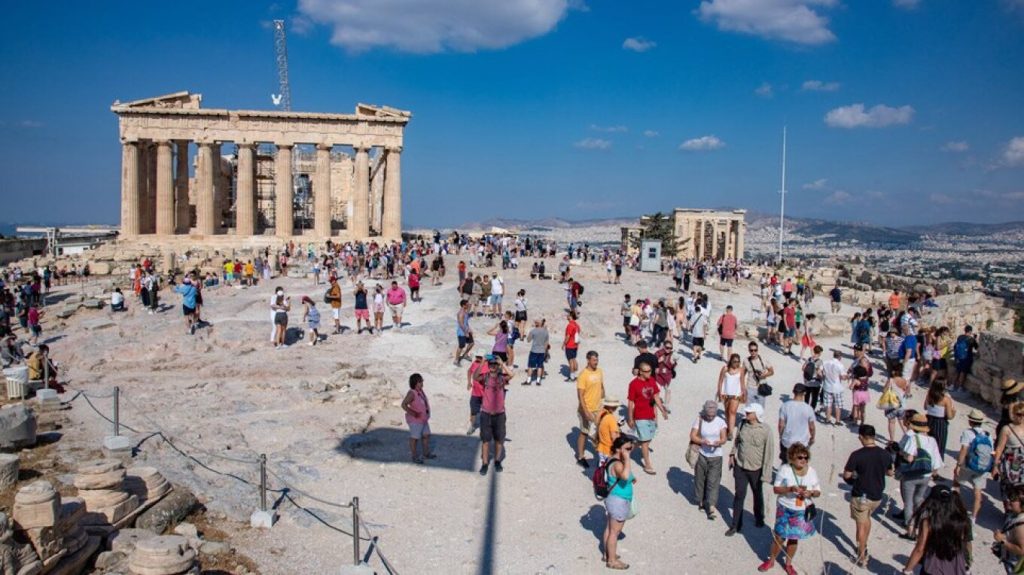
Despite ongoing challenges, Greece maintains a strong position as a safe destination, the Minister of Tourism notes.
The outlook for the current tourism season is encouraging, despite geopolitical developments, reaffirming Greece’s momentum as a modern, competitive, and multifaceted destination. As the Minister of Tourism recently pointed out in an interview with the Athens-Macedonian News Agency, Greece continues to stand out as a safe destination, with its tourism sector showing resilience and adaptability.
For 2026, early data indicate a particularly strong start to the year. In January, tourism revenues surged by 58% compared to the same month in 2025, while arrivals increased by 33%. February and March also recorded further growth in international traffic at airports in Athens, Thessaloniki, and other destinations. At the same time, signals from international markets remain positive. “This was also evident at the major international tourism exhibition in Berlin in early March, even after the outbreak of war. New flight connections and increased interest in more Greek destinations show that Greece continues to maintain strong momentum,” said Tourism Minister Olga Kefalogianni.
Within this context, the strategy to expand target markets focuses both on maintaining traditionally strong markets and strengthening presence in new and emerging ones. “We are placing particular emphasis on North American markets (the US and Canada), as well as India, where direct air connections are creating new opportunities. At the same time, we are interested in markets such as South Korea, Japan, Australia, and the Middle East. Our strategy goes beyond advertising campaigns—it includes co-marketing programs with airlines and tour operators, participation in major international exhibitions, and collaborations with media and networks that influence global public opinion,” the minister stressed.
Tourism revenues on the rise
At the same time, tourism revenues exceeded €1 billion in the January–February 2026 period, according to the Bank of Greece. More specifically, travel receipts rose by 70.7% compared to the same period in 2025, reaching €1.0067 billion. This increase was driven by higher spending from both EU-27 residents (+74.3%, totaling €477.5 million) and non-EU residents (+70%, totaling €516.3 million).
Receipts from eurozone countries reached €407.9 million (+68.6%), while those from EU countries outside the eurozone also saw significant growth, reaching €69.5 million. Among individual markets, revenue from Germany declined slightly by 0.8% (€66.6 million), while France saw a strong increase of 76.8% (€29.4 million). Italy also recorded growth of 41.5% (€55.6 million). From non-EU countries, revenue from the United Kingdom rose to €173.4 million, while revenue from the United States decreased by 13.3% (€92.5 million).
During the same period, inbound travel increased by 38.5%, reaching 2.13 million travelers compared to 1.54 million in early 2025. Air travel rose by 19%, while road arrivals surged by 83.9%. Travel from EU-27 countries increased by 49.1% (1.106 million travelers), while arrivals from non-EU countries rose by 28.6% (1.023 million travelers). Among key markets, arrivals from Germany increased by 8.2%, France by 41.5%, and Italy by 3.6%. From outside the EU, arrivals from the UK rose by 56.7%, while those from the US declined by 9.8%.
Stronger desire to travel—but with changes
Geopolitical instability has significantly reshaped Europeans’ travel habits. While the desire to travel remains strong, many are now opting for safer destinations, last-minute bookings, and stricter budgeting. According to the European Travel Commission (ETC), 82% of Europeans plan to travel within the next six months, with 65% choosing destinations within Europe and only 9% planning trips to other continents.
Southern Europe and the Mediterranean remain top choices, with 59% planning visits by September—an increase of 17 percentage points compared to 2025. Interest in Eastern Europe, however, has declined by 6 points. A notable trend is the growing preference for quieter destinations, with 51% now choosing less crowded locations. The peak travel months remain May, June, and July, followed by August and September.
Financial caution is also evident. About 39% of travelers plan to take one trip, while another 39% plan two—both figures up by 12 percentage points. In contrast, plans for three or more trips have declined due to the rising cost of living. Budgets have also tightened, with most travelers now planning to spend between €501 and €1,000, a sharp drop from last year’s €1,501–€2,500 range.
Trip duration is also shortening, with 4–6 nights now the most common choice, replacing longer stays of 7–12 days that dominated last year. Leisure travel is gaining ground over business or family visits. While air travel remains the primary mode of transport, car travel is becoming more popular due to its flexibility and better cost control.
Sustainability takes center stage
Sustainable travel is increasingly important, with 85% of travelers worldwide and 84% of Greeks considering it important or very important. However, a generational gap is evident: younger travelers express stronger intentions toward sustainability, but older generations are more consistent in putting those intentions into practice.
This finding comes from Booking.com’s 11th report on traveler attitudes toward the social and environmental impact of travel, based on responses from 32,500 travelers across 35 markets. While only 47% of Baby Boomers (61+) say they intend to travel more sustainably in the next year—compared to 60% of Gen X, 71% of Millennials, and 75% of Gen Z—the older group is more likely to follow through with concrete actions.
For example, 67% of Baby Boomers say they will reduce waste while traveling, compared to 56% of Gen X, 52% of Millennials, and 48% of Gen Z. Similarly, 60% plan to reduce energy consumption (e.g., turning off lights and air conditioning), compared to 51% of Gen X, 46% of Millennials, and 42% of Gen Z. Additionally, 59% of Baby Boomers intend to shop more at local, independent businesses, compared to lower percentages among younger groups.
At the same time, extreme weather events are increasingly influencing travel decisions across all age groups. Globally, 74% of travelers consider the risk of extreme weather when choosing destinations and travel timing, while in Greece the figure stands at 66%. Around 68% worldwide avoid destinations known for extreme weather (65% in Greece), and over half report that such risks cause stress when booking trips.
Nearly one in three travelers globally (31%) said their plans were disrupted in the past year due to extreme weather or natural disasters, compared to 17% in Greece. Additionally, 55% globally believe some destinations are now too hot to visit (49% in Greece), while 52% have removed destinations from their bucket list due to such concerns (43% in Greece).
Overall, these shifts highlight a tourism landscape that is becoming more cautious, more selective, and increasingly shaped by sustainability and climate considerations.
